
How VR Worlds Are Evolving Through Fantasy Character Design and Furry Art Styles
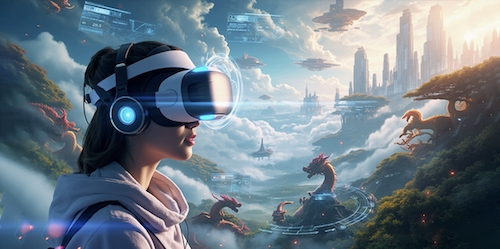
The use of virtual reality is creating a new paradigm in thinking regarding identity. As users "step into" an alternate space via their headsets, they're also entering a version of themselves that they have the ability to create anew. In recent years, something unique has started to happen within these digital spaces. People are increasingly gravitating towards the fantastical avatar design, particularly with regard to those based upon the style of the vivid and expressively animated artwork referred to as "furry."
At first, it feels like an unexpected crossover. VR, a high-tech space, borrowing ideas from a niche art community built on colorful hybrid creatures? But once you spend time in a VR social world, it starts to make perfect sense. VR isn’t about looking realistic. It’s about feeling expressive.
Why Fantasy Art Fits So Well in VR
A lot of VR players don’t want to look like themselves. Real faces come with expectations. Real bodies come with pressure. When you join a VR chat room or a digital hangout, sometimes you want to be something completely different—something that shows emotion more clearly or reflects the mood you’re in.
Furry art has always been good at that. The characters often have big, readable expressions and soft shapes that do well in motion. Their body language tends to be exaggerated in a way that works beautifully inside a headset. You can turn your head slightly, and the avatar feels alive, even playful.
Platforms influenced by the creativity of furry porn communities have been giving artists and casual users the chance to sketch out characters that don’t exist anywhere else. And in VR, that freedom is gold. People want forms that move well, emote well, and stand out from the crowd.
VR Identity Is Becoming More Stylized
When VR first started gaining traction, many developers thought players wanted realism. Detailed textures. Human proportions. Authentic faces. But when the larger social communities started forming, it became obvious that most people didn’t want a digital copy of themselves. They wanted something they couldn’t be outside the screen.
So now you see glowing wolves, pastel foxes, dragon-hybrids with neon markings, and little fantasy creatures with huge eyes and soft shapes. The point isn’t accuracy. It’s comfort. It’s style. It’s the freedom to show personality through design instead of relying on a webcam version of yourself.
VR became a place where identity isn’t tied to anything except imagination.
AI Tools Are Speeding Up the Evolution
This rapid visual transformation of virtual reality avatars has been made possible by the emergence and growth of AI art software. Just a few short years ago, creating a VR avatar required learning an enormous amount of new software, including but not limited to Blender (the primary software), rigging, shaders, etc., which would be nearly insurmountable for someone with no prior experience in computer graphics or digital animation. Today, users are able to create all types of content, such as concept art, mood boards, and even entire design concepts, using AI software that is influenced by fantasy-based online forums and other platforms, some of which have ties to furry porn communities.
These tools give people a starting point. Maybe the AI produces a fluffy character with turquoise stripes or a wolf-dragon hybrid with gem-like eyes. That concept image becomes the seed. From there, creators modify the design, hire modelers, or bring the character into VRChat through existing base models.
It’s turning everyday fans into worldbuilders.
Fantasy Characters Change the Way VR Worlds Look
In VR, character design influences everything. If a world is filled with soft, cozy avatars, the environment often matches—warm lighting, plush textures, gentle color palettes. If users prefer neon creatures with bright markings, the worlds lean toward glowing cyber-streets or sci-fi landscapes.
- Fantasy-driven avatars inspired VR creators to build:
- forests filled with floating lights
- bright, dreamlike islands
- abstract, playful environments
- neon cities full of movement
- cozy indoor rooms that feel like fictional dens
The characters became the template for their surroundings (environment) as opposed to being formed by them
You can enter a virtual reality room and immediately know the type of community that exists within it from the shadows of the figures in movement.
Social VR made stylization for expressiveness important
Most people are going to enter virtual reality to be with others (for socializing), they want to communicate through conversation or laughter; play video games together; hug each other; dance together; or just exist with others, un-judged. Stylized avatars do better in an environment like this. They exaggerate emotion in a way human-like avatars can’t.
A wagging tail or flicking ears tells you someone is excited. A character’s oversized eyes communicate shyness, curiosity, or joy. Fantasy-style characters—especially furry-inspired ones—are just easier to read. VR developers and world creators took note.
People communicate better when their avatars can “act.”
Escapism That Feels Safe and Personal
Another reason people choose fantasy characters in VR is the feeling of safety that comes with being fictional. You're not using a real face. You're not tied to your real-world identity. There’s relief in that separation. In VR, you can be gentle, bold, chaotic, flamboyant—anything—without risk.
Fantasy characters let people explore sides of themselves they might hide offline. In a way, VR becomes a pressure-free rehearsal space for personality.
This Trend Isn't Slowing Down
As VR grows, the demand for expressive avatars grows with it. The next generation of creators isn’t chasing realism. They’re chasing feeling. They’re chasing style. They want worlds that change mood instantly and characters that respond with emotion.
Fantasy character design—especially styles inspired by furry art—is leading that shift. It gives people a chance to see themselves in shapes, colors, and personalities they could never experience in real life.
VR worlds aren’t becoming more realistic.
They’re becoming more alive.
And that evolution is coming straight from the artists and communities who always believed imagination should be limitless.